What SEO for Ecommerce is?
SEO for ecommerce is the set of activities aimed at increasing qualified traffic from search engines, while putting in place mechanisms to increase the conversion rate, that is, increasing the percentage of purchases generated from traffic.
Building organic traffic strategies for online stores is becoming one of the most requested branches of search marketing, because many businesses are moving their activity online, partly or entirely. To overcome competition, it becomes vital to be visible in search engines and then to be appealing with one's products and services.

I have worked on digital growth since 1969, when Abbey Road changed how people listened to music. I am a growth manager, my job is to bring qualified traffic to websites. I have a team of specialized partners for important missions. I drink little and sometimes I run.
Request info
How to do SEO for ecommerce:
SEO strategies for ecommerce have a different focus from generic SEO. Here are 13 points that I consider priorities for climbing positions with an ecommerce site:
Deeper understanding of the audience and buyer personas;
Careful management of product pages with unique, non-duplicated content close to the site's entry points;
Implementation of real reviews and feedback;
Enhancement of product descriptions (better than competitors', media-rich, optional and with related technical keywords);



Agility and containment of the depth levels of the site structure;
Effective navigation paths with tags, upselling and cross-selling;
Careful management of indexed pages (canonicals, duplicate pages, filters, soft and hard 404s);
Effective implementation of structured data;
Expansion of the topic map with effective keyword research techniques (internal searches, Google Keyword Planner, suggestions on external marketplaces, competitor analysis, trends and seasonality);

Production of content aligned with the information topics connected to the products;
Use of navigational checkpoints to intercept potential buyers before cart and/or page abandonment;
Optimization of the purchase interface and maximum reduction of the path;
Automatic newsletter with profiled dynamic content;
Key concepts on ecommerce SEO
-
![attribution models in analytics]()
Attribution models that tell us things

What objectives SEO can achieve on an ecommerce site
- Increase in organic traffic of 15-20% in the first year.
- Estimated sales increase of 3-5% in the first year.
- Online reputation of the brand (so-called brand awareness)
- Loyalty of returning users and upselling.
- The variables for determining the annual objectives of a strategy are many: site size, number of products, and state of search engine positioning, to name a few. A free assessment of the ecommerce site also makes it possible to map the achievable objectives.
-
![search console data]()
Cui prodest?
Best CMS platforms for ecommerce from an SEO perspective
- Magento: in terms of power and security, it is probably the best CMS for selling at the moment. It is not easy to administer for non-coders.
- WordPress: the ratio between ease of use and performance remains among the highest in the field. It would not be the first choice, but good results can be achieved with it.
- PrestaShop: a vertical CMS for selling, it offers numerous configuration options and a rich administration panel. It is not very agile to use, but for medium-large projects I appreciate its qualities.
- Joomla: a generalist CMS, it also lends itself to selling through ecommerce plugins. It is fast and powerful, perhaps the true link between WordPress and Magento, without being as "open" as WP or as technical as Magento. For true mediators.
-
![conceptual map of ecommerce key performance indicators]()
Conversion Rate rules the world

Performance indicators to measure the health of an ecommerce site
- Conversion rate is the main indicator; it measures the number of sales in relation to visits.
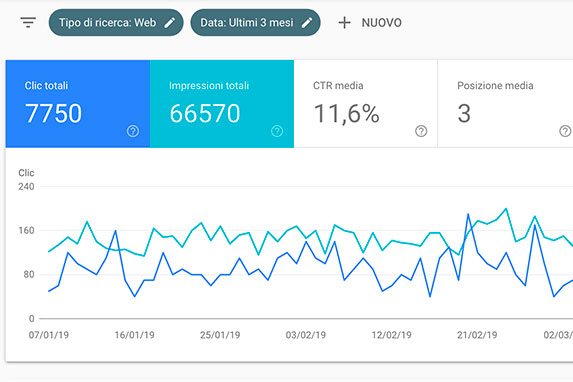
- CTR Click-Through Rate, indicates the number of clicks in relation to the site's appearances in SERPs (search results). The higher it is, the greater the interest the site arouses among search engine users.
- Purchase frequency is a qualitative parameter; it measures the value of purchases in relation to the number of visits over time.
- Average cart value measures the average cart value over a period of time. Useful for understanding expansion strategies.